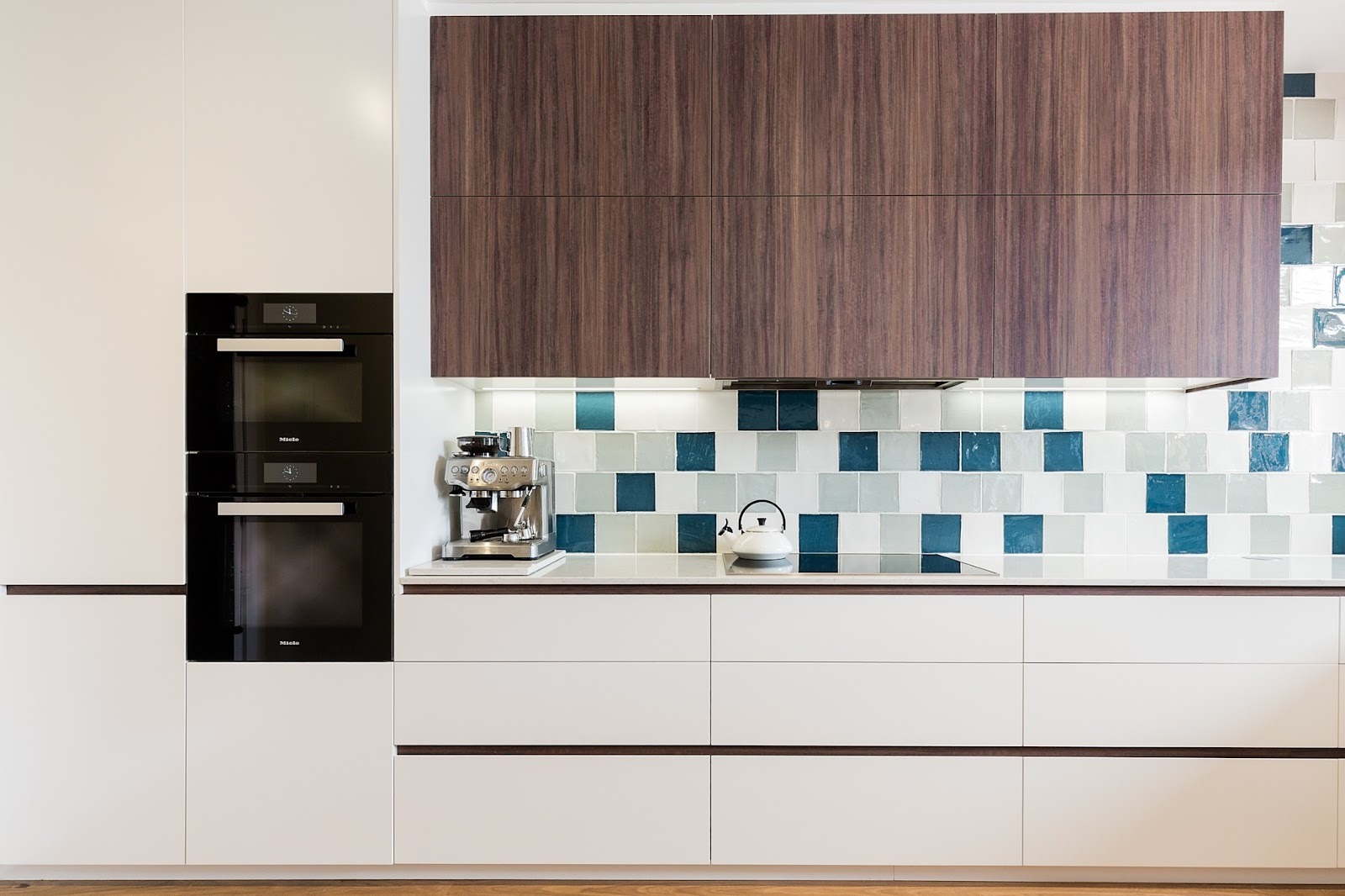
Standard Kitchen Cabinet Dimensions Explained: Height, Width & Depth Guide
Kitchen Renovations Melbourne | PublishedStandard Kitchen Cabinet Dimensions Explained: Height, Width & Depth Guide
When planning a kitchen renovation, cabinet dimensions are one of those details that influence everything – from how the space feels to how efficiently it functions day to day, right through to the cost.
Understanding standard kitchen cabinet dimensions helps you plan whether an “off the shelf” kitchen might work or when custom cabinetry will be worth the investment.
In this guide, we break down standard kitchen cabinet sizes used in Australia and explain when deviating from the norm makes sense.
2. Why Kitchen Cabinet Dimensions Matter
Kitchen cupboard dimensions aren’t just about going with whatever fits in the room. They directly affect how your kitchen works and appears.
From an ergonomics perspective, the right base cabinets and benchtop height reduce strain on your back, shoulders and wrists. Storage is also impacted – poorly sized cabinets can waste valuable space or make everyday items hard to reach.
Cabinet dimensions also need to work in harmony with other elements such as appliances, splashbacks and lighting. Choosing similar sized or dimensionally related cabinets, creates visual cohesion and helps avoid costly changes during installation.
A good place to start is with 600mm cabinets as dishwashers, ovens and many integrated fridges fit these dimensions.
Working with increments of 600mm will help place critical items and work out the best fit for other cabinets such as pantries, sinks, drawers or fridges, where wider cabinets will be required.
Smaller cabinets can then be used to fill spaces where required.
3. Standard Base Cabinet Dimensions (Australia)
Base cabinets form the foundation of your kitchen and support the benchtop, so their sizing is critical.
Standard base cabinet dimensions typically include:
- Base cabinet height: 870mm (including kickboard, excluding benchtop)
- Standard benchtop height: around 900-920mm once a 30–40mm benchtop is added. This can be higher if you are tall or prefer a higher working surface
- Cabinet depth: 580mm (standard for Australian kitchens, allows a 600mm benchtop to slightly overhang)
- Kitchen cabinet width: commonly ranges from 300mm to 1200mm, depending on function
These measurements suit most homeowners and appliances, which is why they’re widely adopted across both flat pack or standard solutions and architecturally designed kitchens. They are certainly a starting point for the design which can be adjusted in a custom design if required.
4. Standard Wall / Overhead Cabinet Dimensions
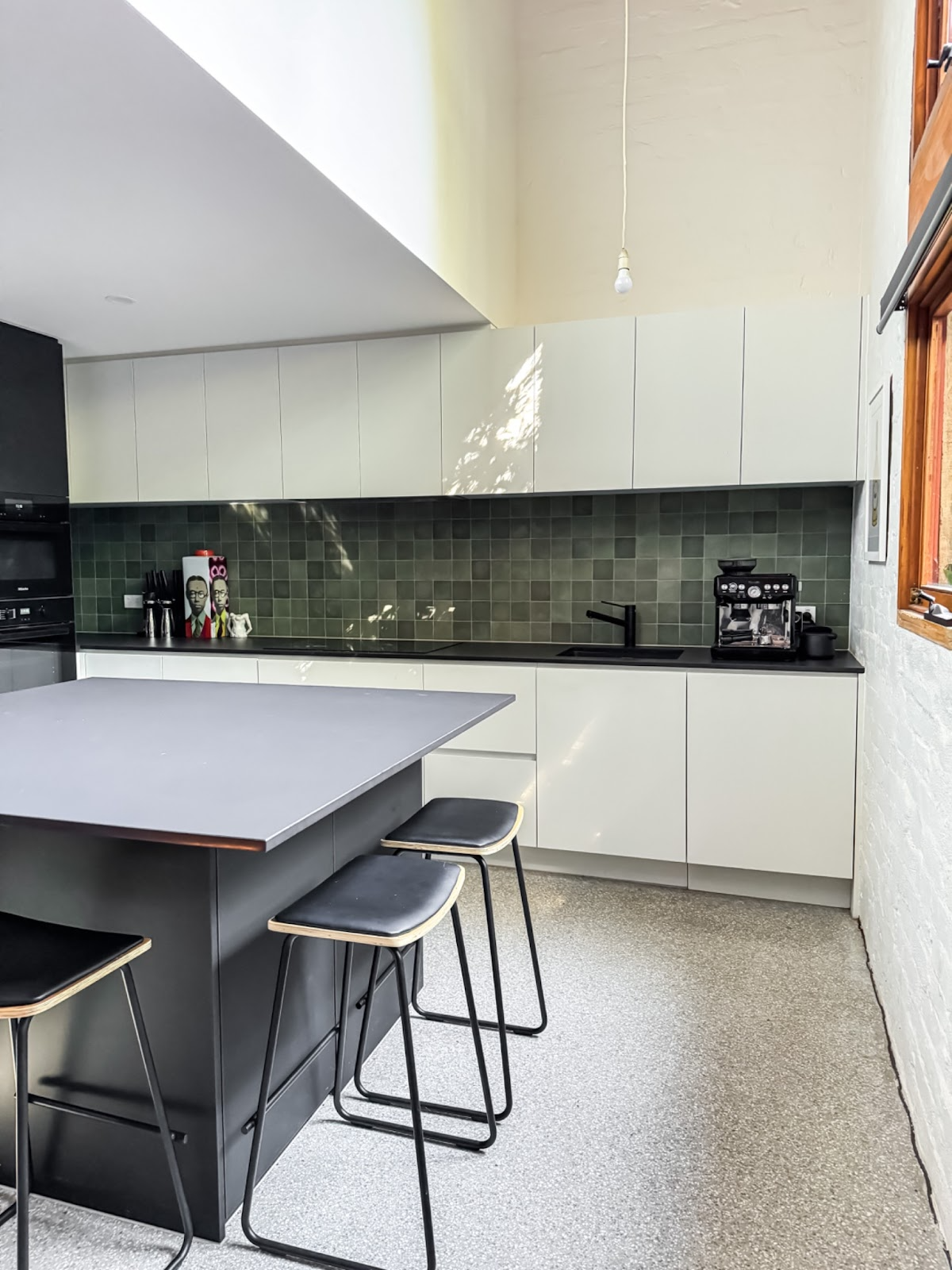
Overhead cabinets provide essential storage without taking up floor space, but their proportions need careful consideration.
Typical overhead cabinet dimensions are:
- Overhead cabinet height: 600mm–900mm
- Cabinet depth: 300-400mm (your rangehood will often determine this depth)
- Clearance from benchtop: 650mm (minimum for cooktops, more for some models depending on specifications)
If you’ve ever wondered how tall are kitchen cabinets, the answer depends on ceiling height and design intent. In newer homes with higher ceilings, taller overhead cabinets or bulkheads are often used to create a more seamless, full-height look.
5. Tall Pantry & Appliance Cabinet Dimensions
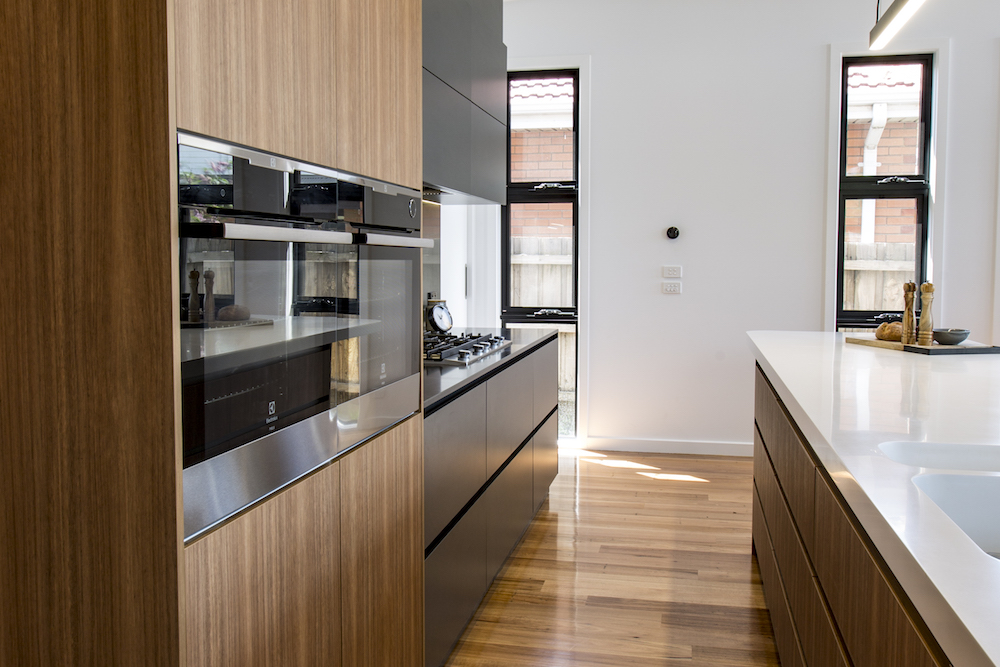
Tall cabinets are commonly used for pantries, ovens and integrated appliances.
Standard tall cabinet dimensions include:
- Typical height: 2100mm–2400mm
- Depth: 580mm (to align with base cabinets)
- Width: generally between 450mm and 900mm
Fridge cabinetry can be designed to house freestanding or integrated fridges, with ventilation and clearances carefully planned. This is an area where custom kitchen cabinet sizing is often required, particularly with European appliances.
6. When to Choose Custom Kitchen Cabinet Sizes
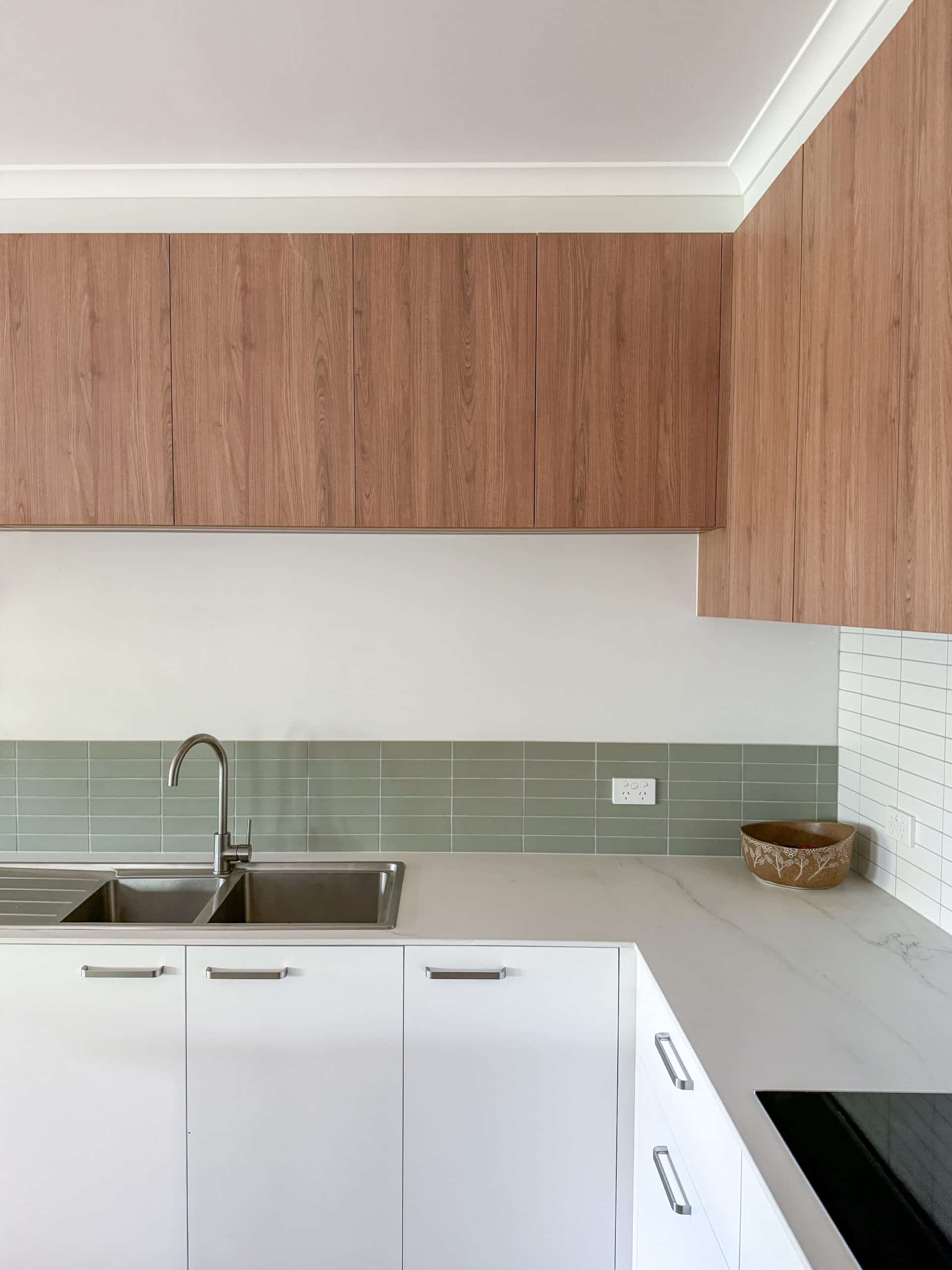
While standard kitchen cabinet sizes work well in many homes, there are situations where customisation is worth considering.
You may benefit from custom kitchen cabinet sizing if your home has:
- Sloped ceilings or unusual wall shapes
- Tight or awkward spaces
- Very tall homeowners requiring adjusted benchtop heights
- European or integrated appliances with non-standard dimensions
- Heritage details that need to be respected rather than boxed in
Custom cabinetry allows flexibility in cabinet depth, height and internal configuration, ensuring the kitchen works specifically for your household.
7. Work With a Design + Build Team
At The Inside Project, we design kitchens that balance functionality, proportion and longevity. Whether your renovation suits Australian kitchen cabinet standards or requires fully custom cabinetry, our design + build team guides you through every decision.
Explore our recent kitchen projects, or book a consultation to discuss how we can help bring your kitchen vision to life.
Related reading:
Subscribe to our blog
We’d love to hear about your project.
Fill in the form and we will get in touch to chat about how we can transform your space.
Call us on 1300 126 457Servicing Melbourne
Book Your Free Consultation
"*" indicates required fields
