Best Open Plan Kitchen, Living & Dining Layouts for Modern Homes
Open Plan Kitchen Living | PublishedLooking to create an open plan kitchen, living & dining room that flows well and is spacious but doesn’t feel impersonal? You’re not alone. Open plan layouts have become the go-to for modern Australian homes, offering a sense of space and connection that’s hard to match.
Whether you’re renovating a family home or redesigning a smaller inner-city property, getting the layout right is key to achieving a space that works.
In this guide, we’ll break down the best open plan kitchen living dining layouts, from long and narrow to L-shaped and semi-open, along with common pitfalls to avoid.
Why Open Plan Living Is So Popular
Open plan kitchen, dining and living areas have transformed how we use our homes. They create a central hub that brings family and guests together, encourages better use of natural light, and improves flow.
The key benefits:
- Connection – It’s easier to cook while chatting to guests or keeping an eye on the kids.
- Light and space – Removing walls allows daylight to move freely, creating a brighter, more expansive feel.
- Flexibility – Open plan spaces can evolve with your lifestyle, from growing families to entertaining.
Common misconceptions:
- “They don’t feel cosy.” This all comes down to the right layout, no one wants a big square box that feels impossible to fill. With the right layout, open plan living can make better use of your existing footprint and create a practical and homely space.
- “It’s too noisy.” Thoughtful zoning and materials (like furniture and soft furnishings) can help manage sound effectively.
Popular Open Plan Kitchen Living Dining Layouts
When it comes to choosing the right layout for your open plan kitchen lounge dining room, there’s no one-size-fits-all solution. It depends on your home’s footprint, how you use the space, and your style preferences.
Long & Narrow Open Plan Layouts
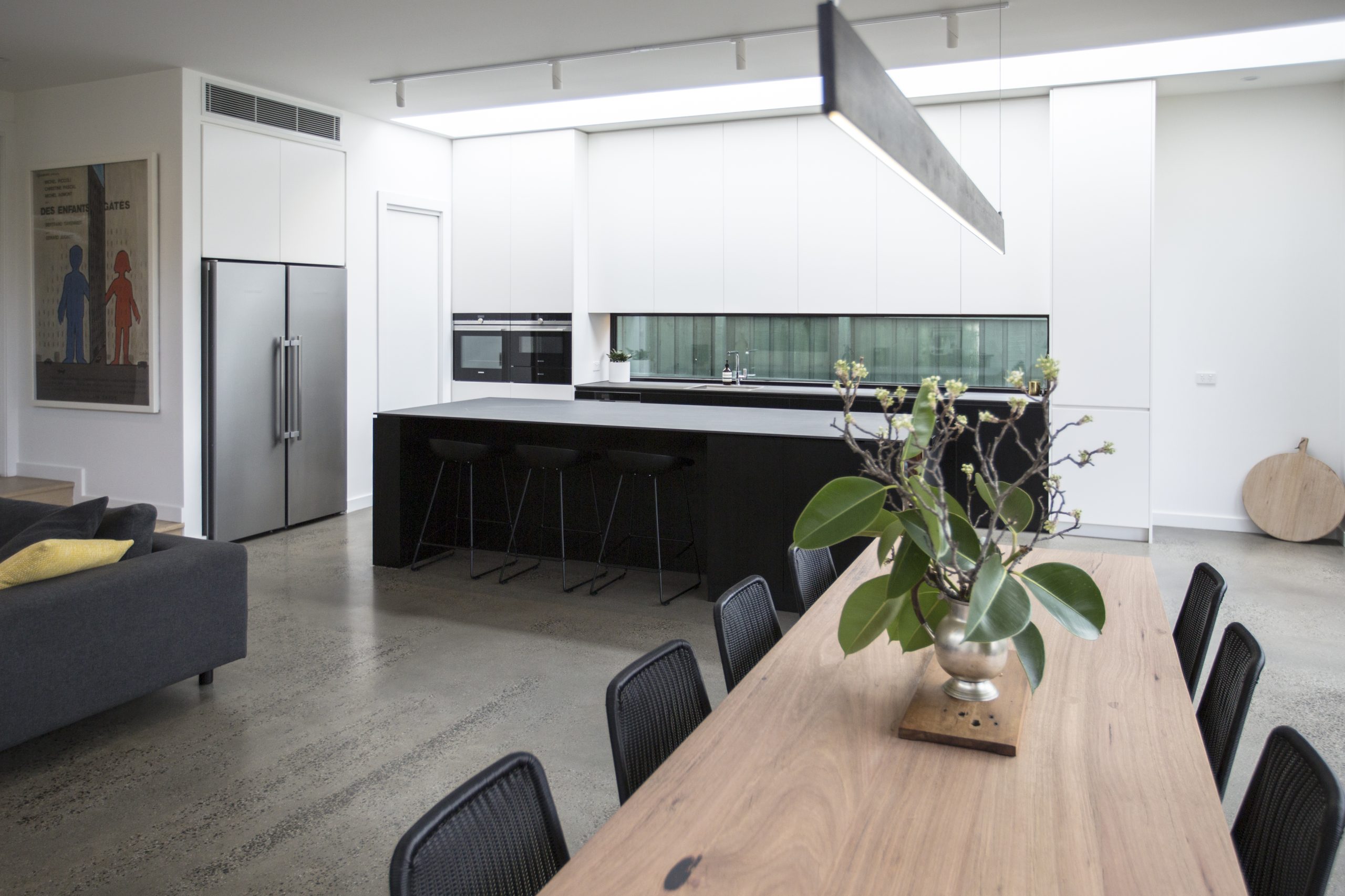
Perfect for terrace homes or apartments with limited width, a long open plan kitchen living layout places each zone in a linear sequence. For example:
- Kitchen at one end with a central island bench.
- Dining in the middle to act as a bridge.
- Living at the far end, ideally near natural light sources.
- Kitchen in the middle is also an interesting take on this layout. It can be a nice way to separate the living and dining spaces and create a more intimate lounge area.
This layout benefits from strong lighting plans and careful furniture placement to avoid the “hallway” effect.
L-Shaped Open Plan Layouts
A popular choice for family homes, an L-shaped open plan kitchen dining living room creates two connected wings:
- One leg of the “L” is usually the kitchen and dining area.
- The other is a more relaxed living space.
This format allows for natural zoning and gives each area its own identity without needing walls. Great for corner blocks or homes with courtyard access.
U-Shaped & Galley Style
These layouts centre the kitchen and provide strong definition without closing off the space:
- U-shaped kitchens can hug a space with benchtops on three sides, often including a breakfast bar that opens to the dining or living.
- Galley kitchens suit long floor plans and maximise bench space while maintaining openness through flow at both ends.
Semi-Open Plans (aka Broken Plan)
If you love the openness but want a bit of separation, semi-open or “broken” plans might be ideal. They use:
- Half walls
- Partitions
- Ceiling or floor level changes such as a sunken lounge
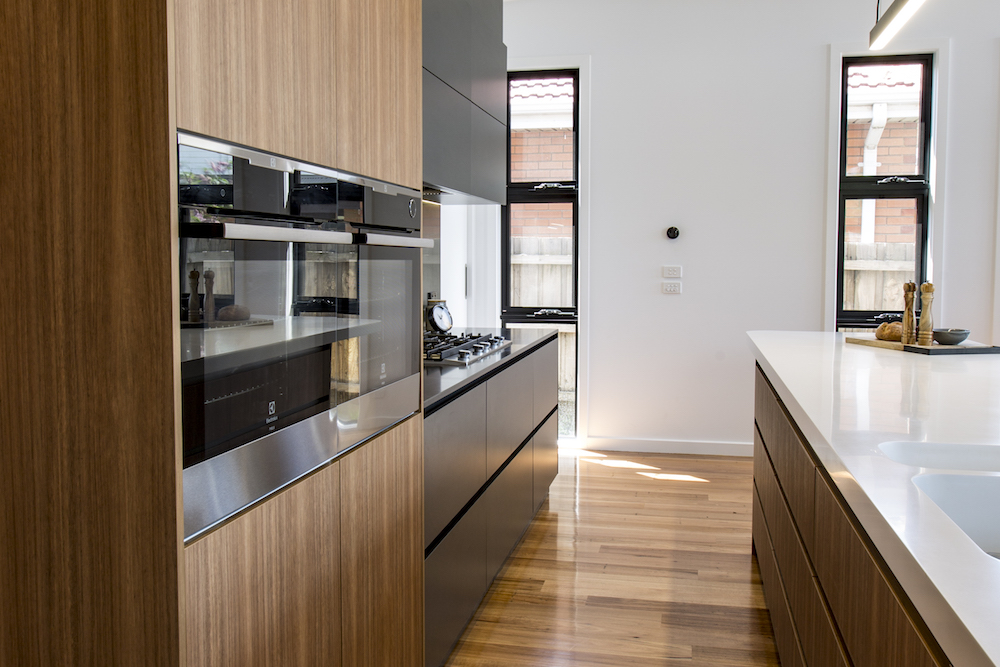
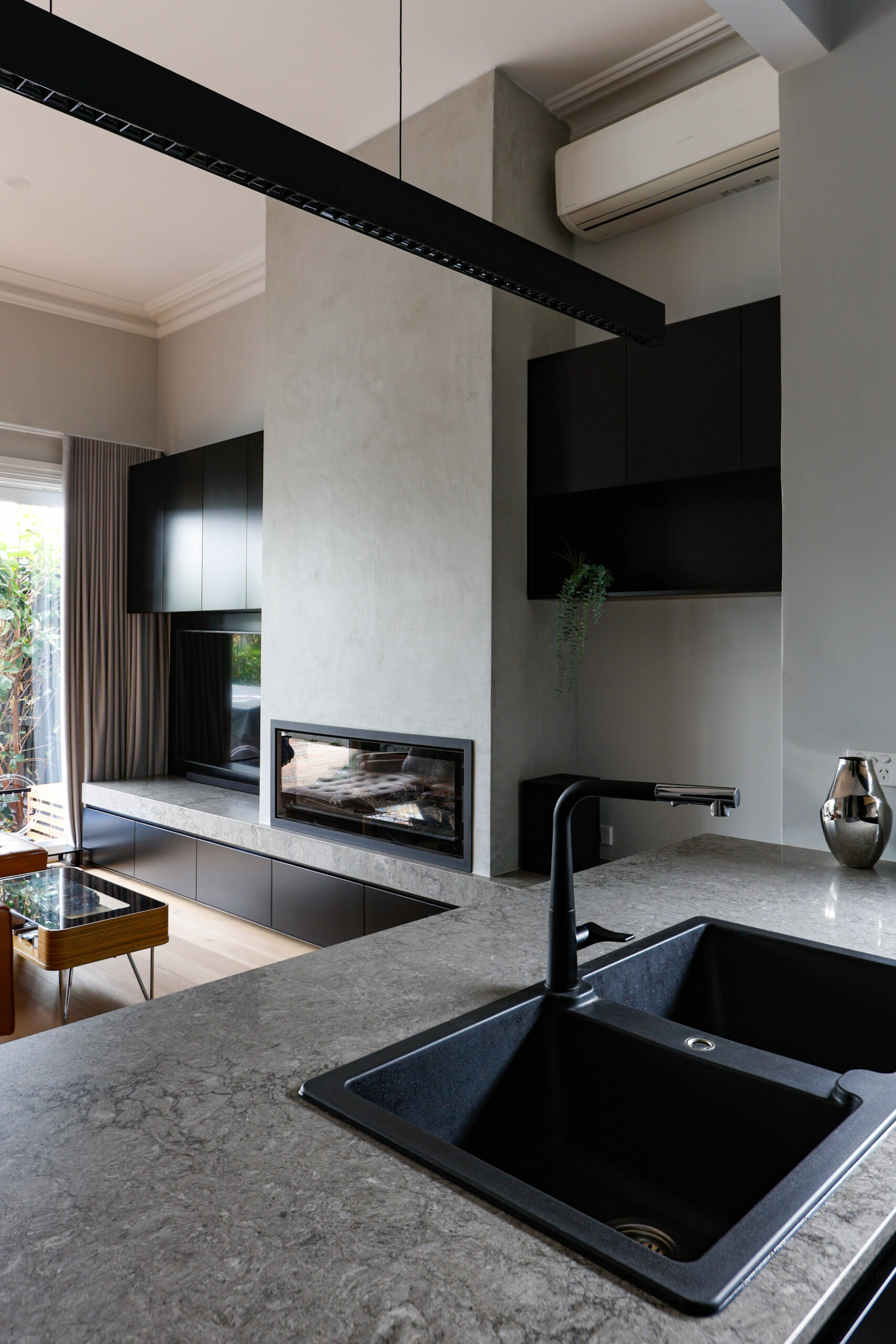
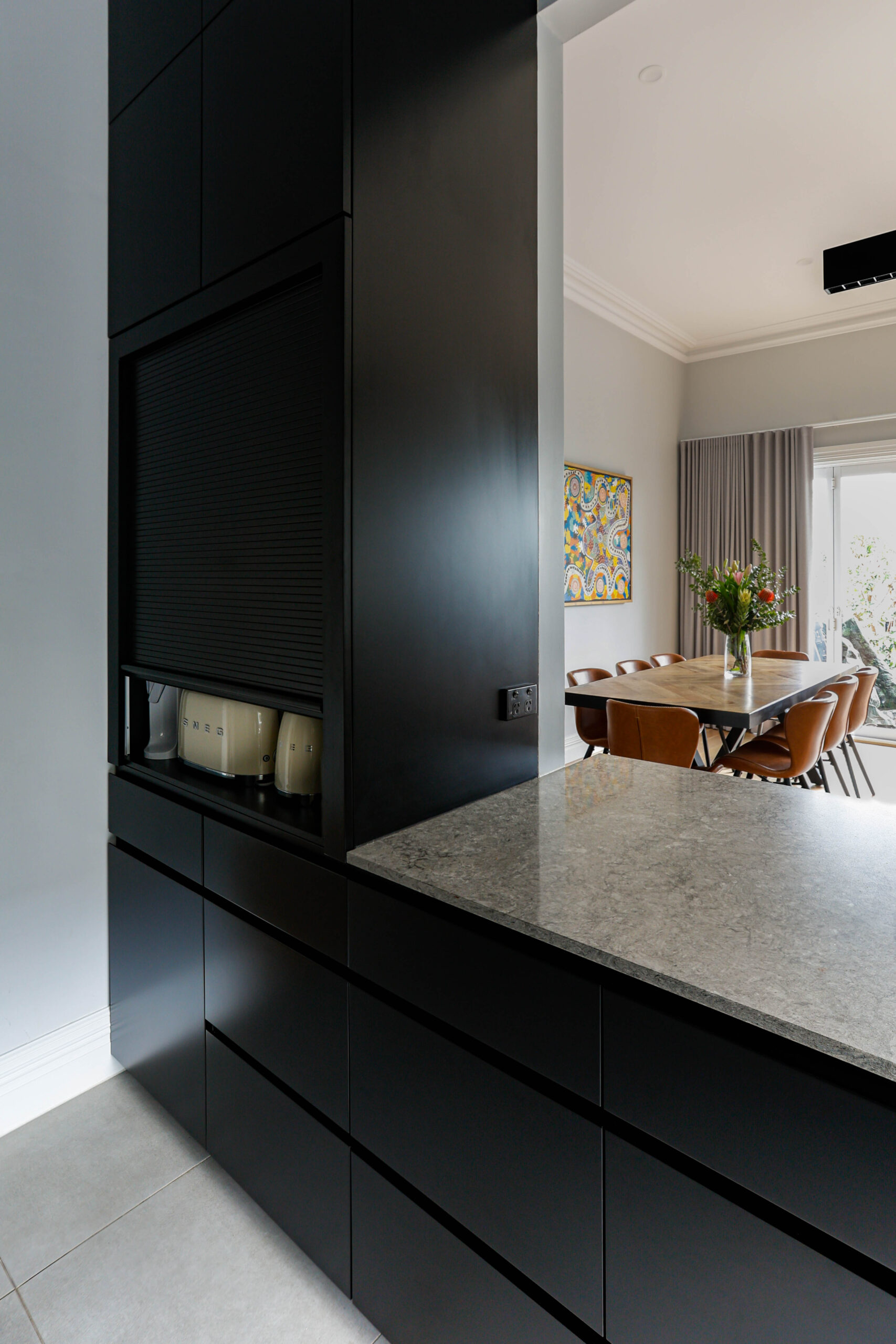
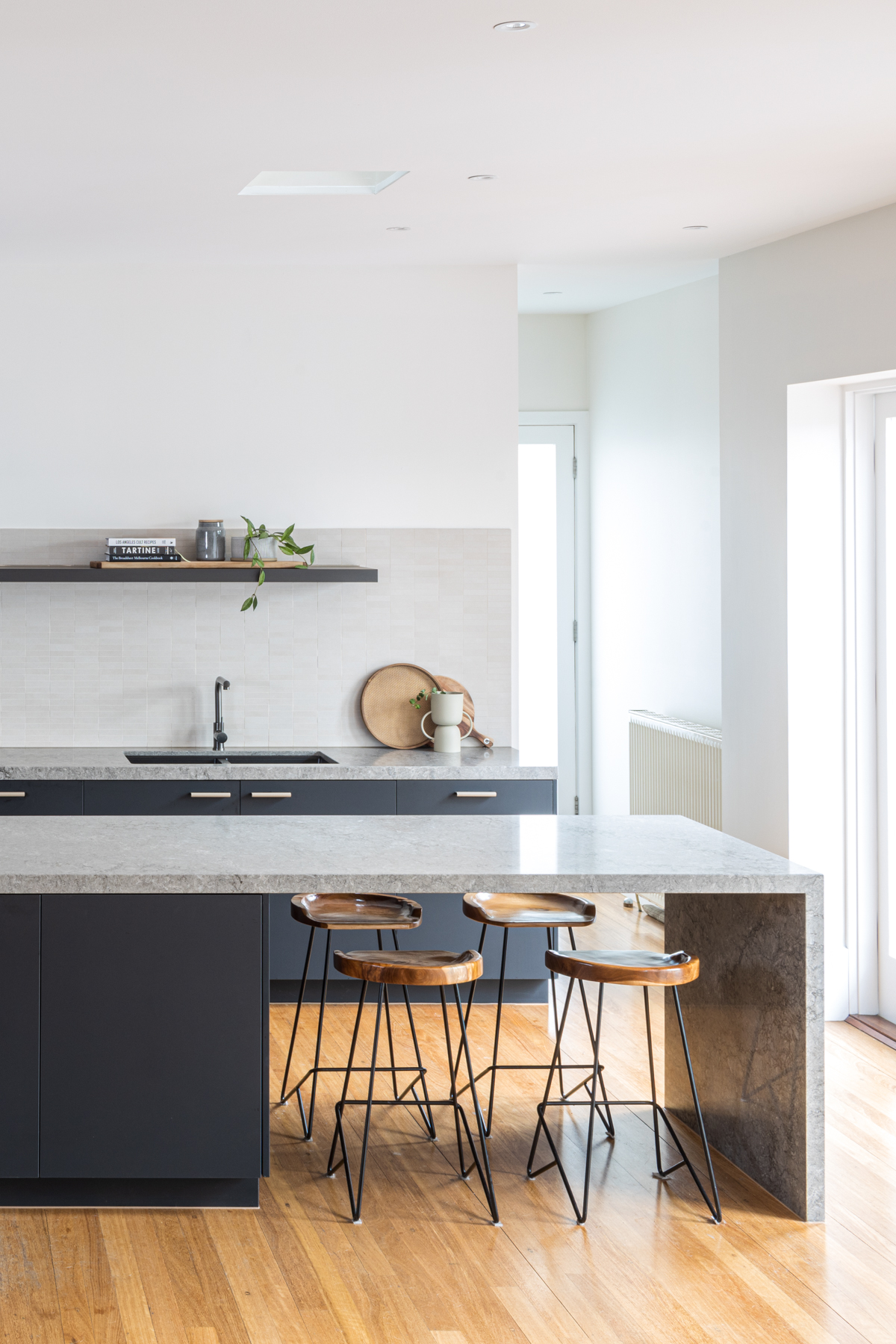
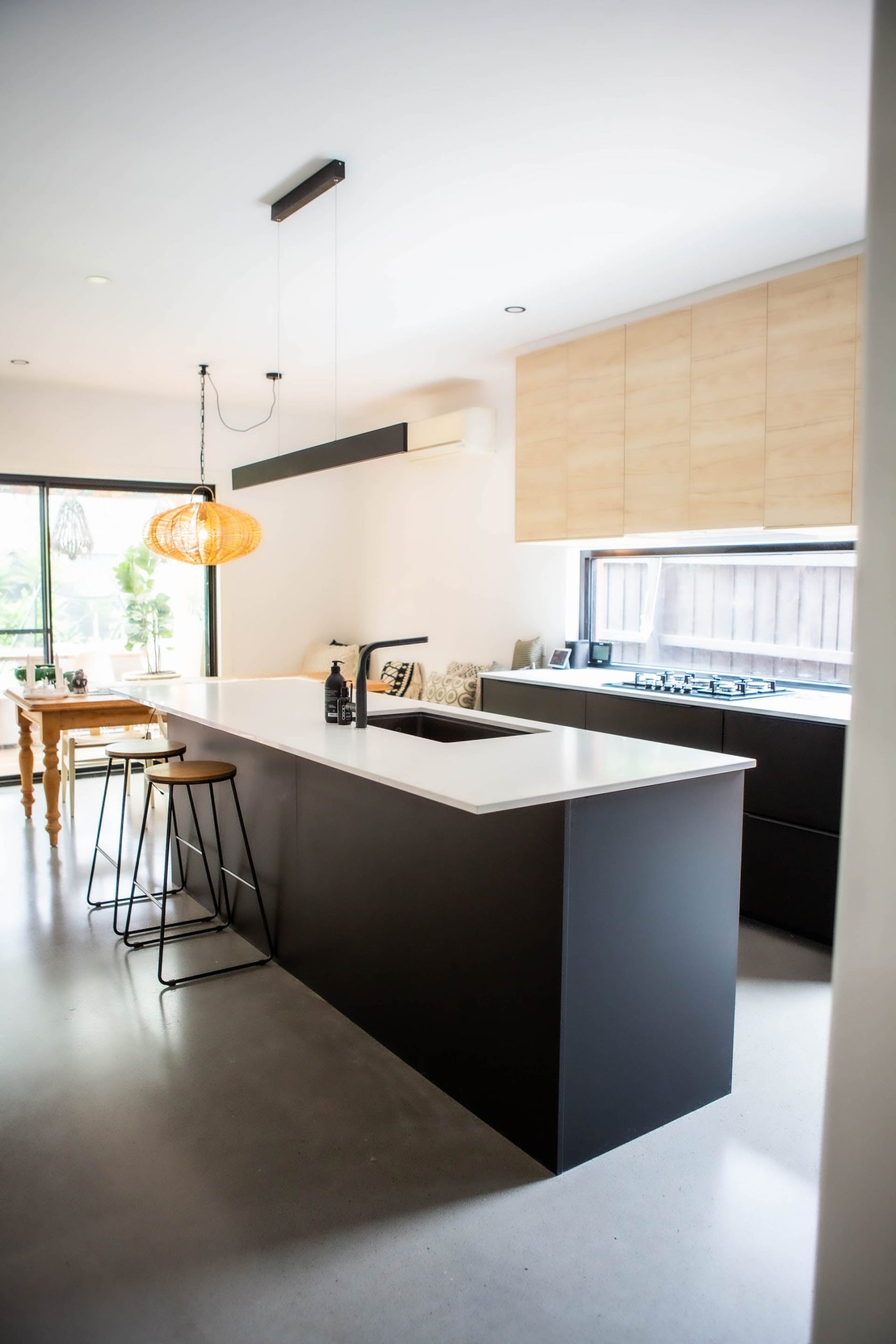
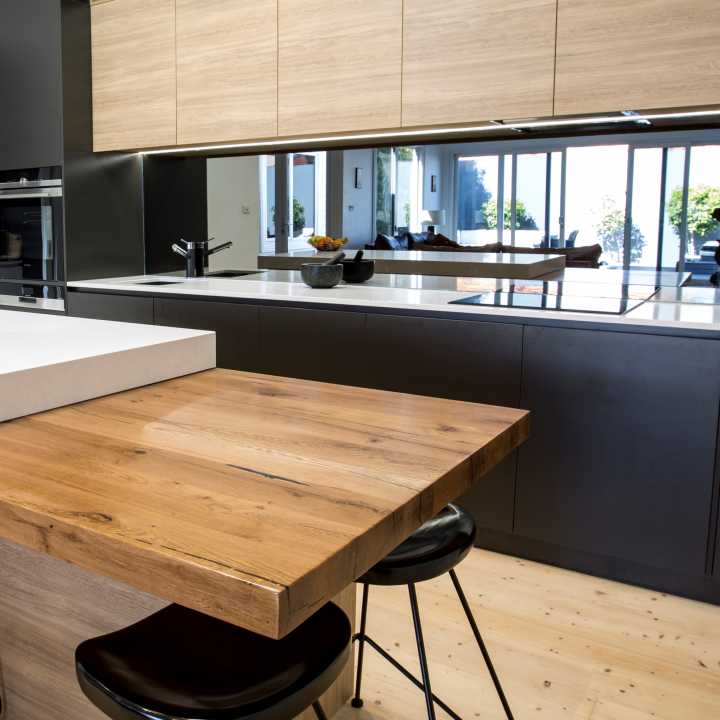
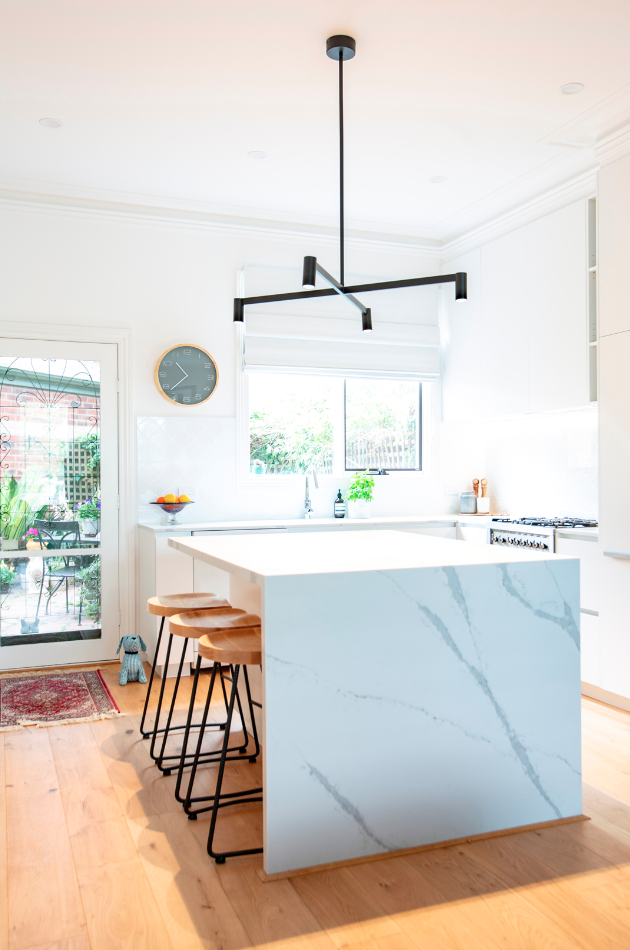
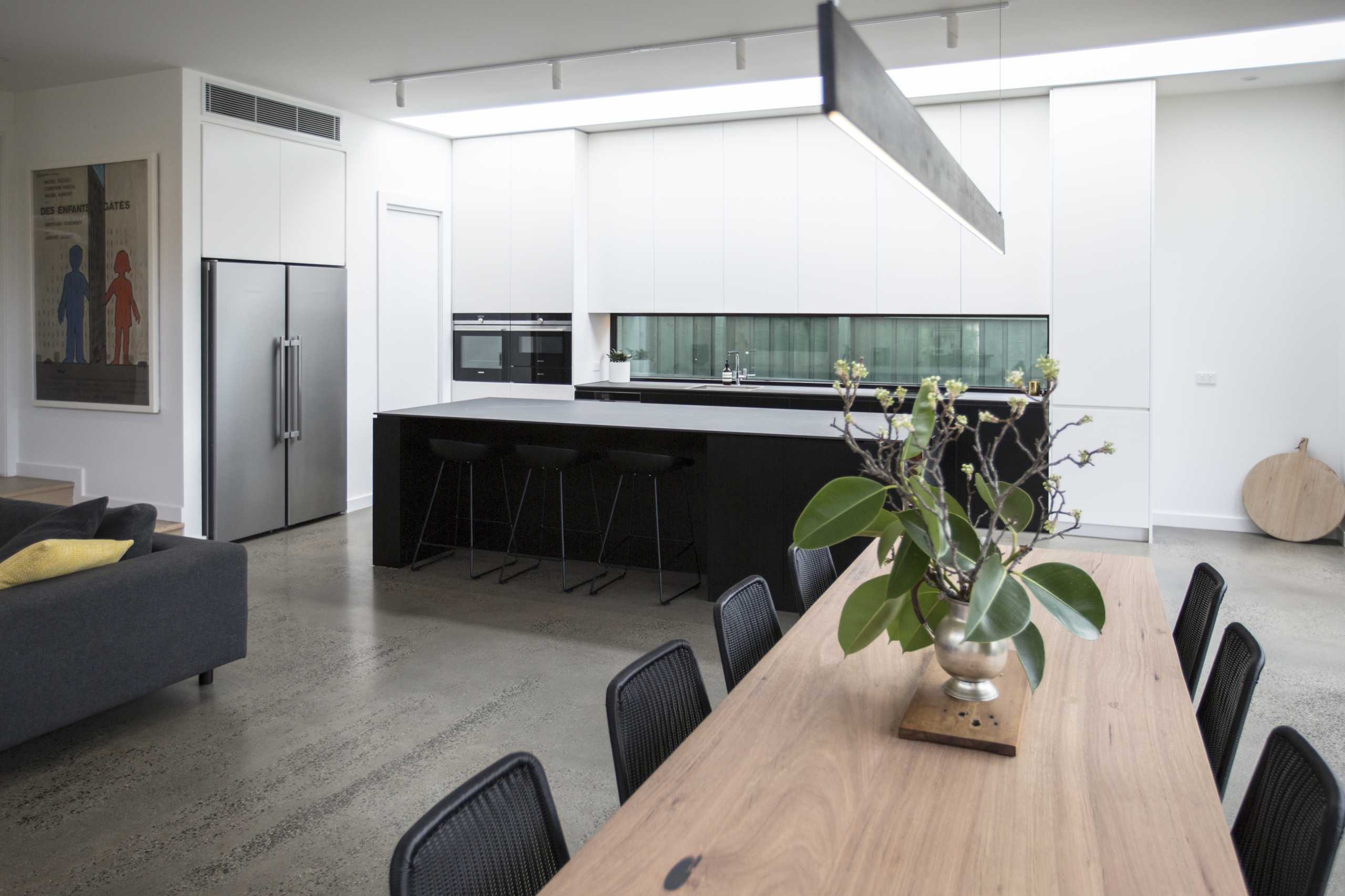
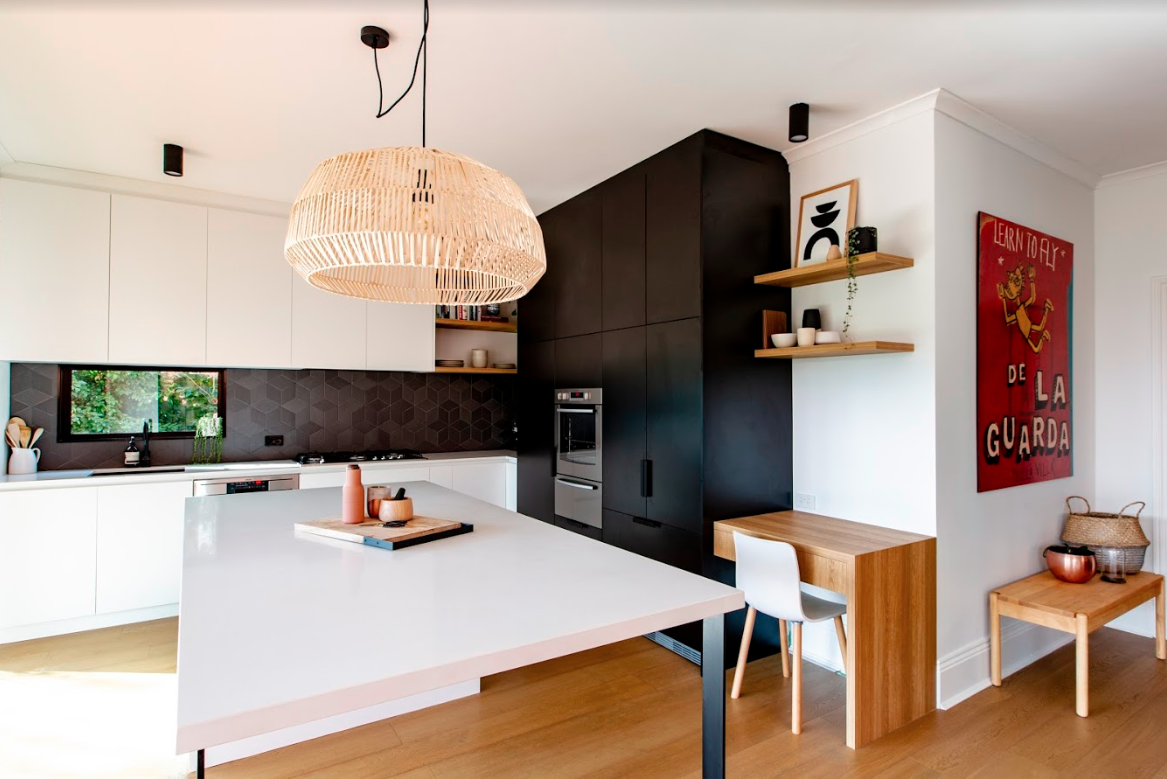
This style offers the benefits of connection with the comfort of a little more privacy or acoustic control.Looking for idea for open kitchen and living room spaces? View our kitchen renovations for real-life examples from across Melbourne.
Click to view

How to Zone an Open Plan Space
Zoning is what makes an open plan kitchen diner living room work beautifully without feeling like a big box.
Here are some tried-and-tested techniques:
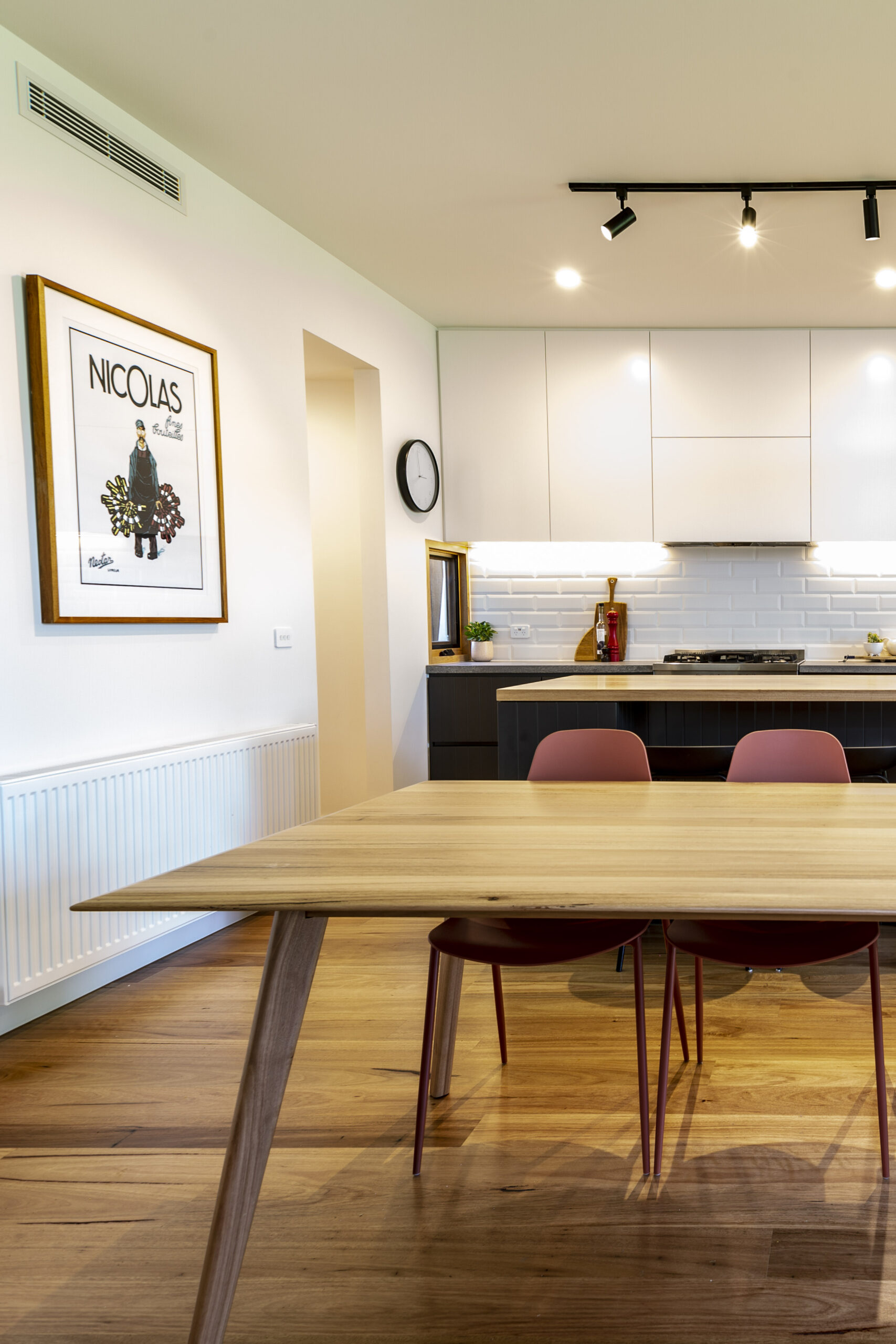
- Furniture placement – Use lounges, sideboards or dining tables to divide areas.
- Rugs – Ground a space like the lounge or dining with a rug to signal its purpose. A rug should always be oversized. If under the dining table it must be larger than the footprint, including the chairs. In a living room, the rug should be wider than the sofa and allow the coffee table to sit on it as well.
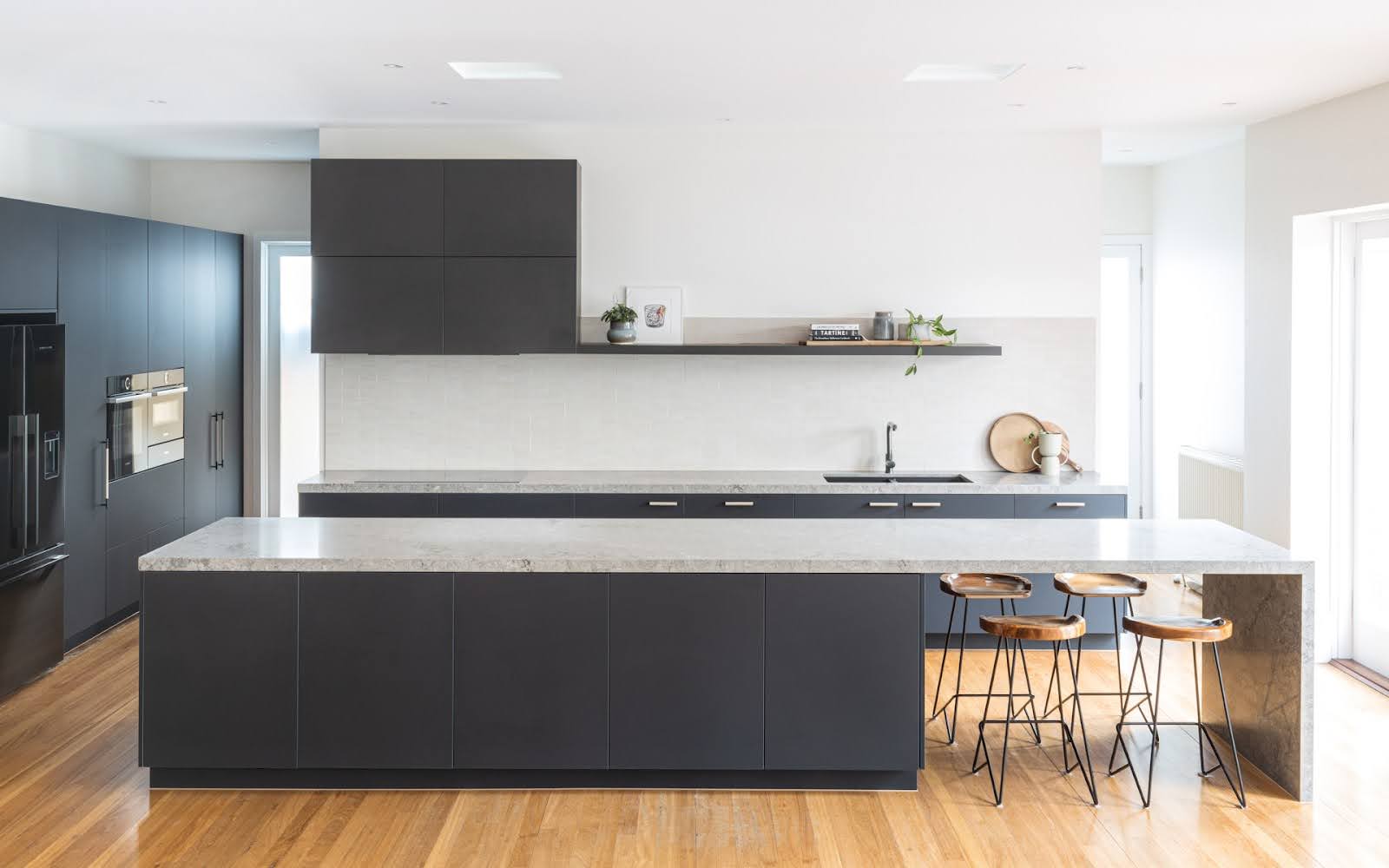
- Island benches – Act as a natural divider between kitchen and dining zones.
- Lighting – Pendant lights over dining tables or kitchen benches help define areas and add mood.
- Ceiling changes – A bulkhead over the kitchen or living area can subtly define zones without walls.
- Floor level changes – sunken lounge rooms are having a moment and are a great way to give an area definition.

Layout Mistakes to Avoid
Designing an open plan kitchen living dining room takes more than removing walls. Avoid these common traps:
- Ignoring natural light paths – Place living areas near windows and avoid blocking sunlight with tall cabinetry or partitions.
- No access to outdoor spaces – Connecting your open plan living area to outdoor spaces increases the feeling of space and allows flow when using the space in good weather.
- Poor traffic flow – Ensure there’s enough circulation space between zones, especially around the kitchen and island.
- Underestimating storage – Open plan spaces mean fewer walls, which often equals less built-in storage unless planned carefully.
Real Layout Examples from Our Melbourne Projects
We’ve designed and built hundreds of open plan spaces across Melbourne — here are a few to explore:
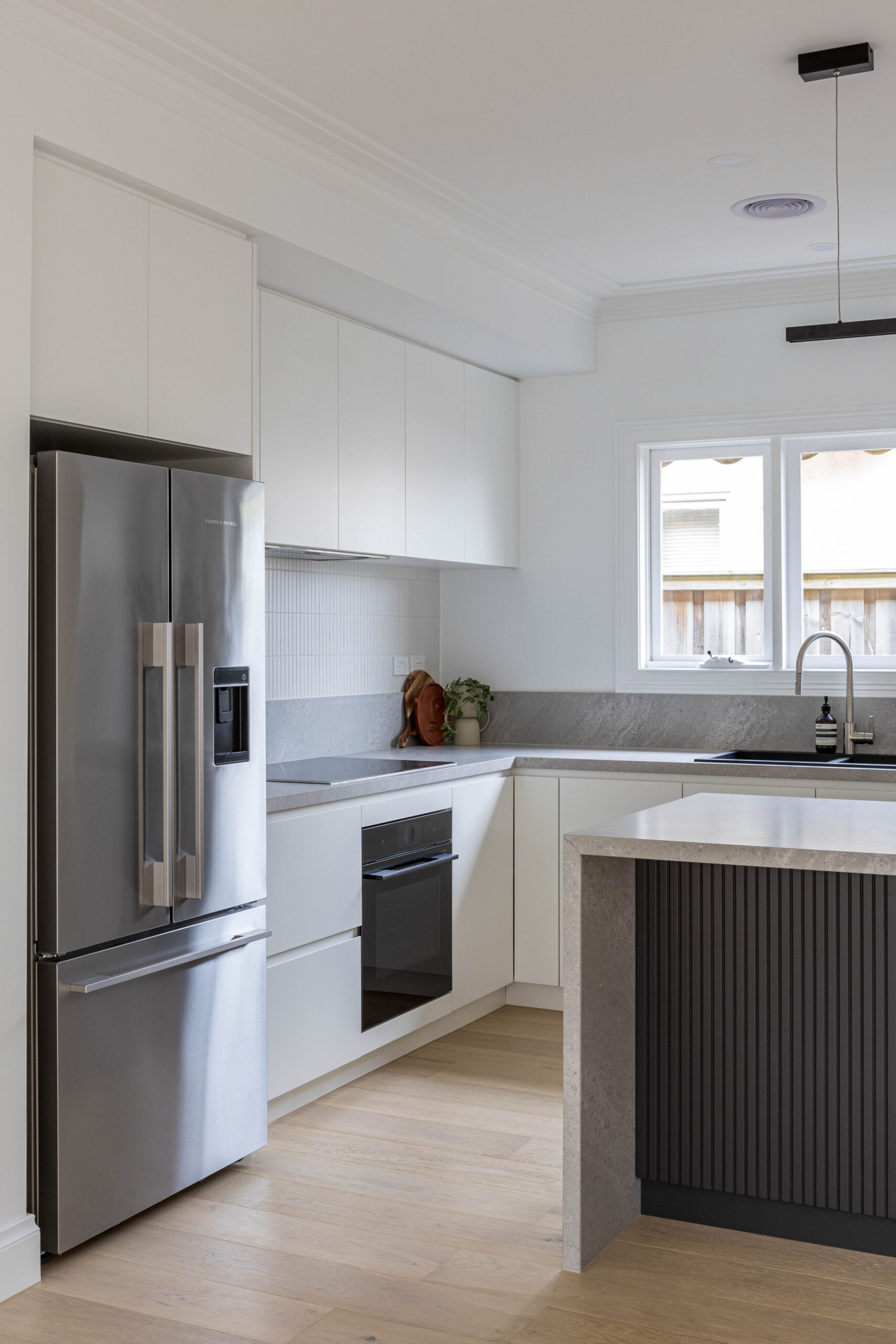
- Elwood Project – A stunning Edwardian home reimagined with a large kitchen with two galley runs, complete with massive island bench for entertaining and casual dining.
- Yarraville Project – A galley kitchen that is cleverly separated from the living and dining with cabinetry. Living room joinery that matches the kitchen connects the two spaces.
- Williamstown Project – A previously separate kitchen, with dining and living disconnected, was transformed by removing walls and opening up the space to allow light to flow.
Each one shows how tailored layout choices can completely transform a home.
FAQs
Open Plan Kitchen Living Layouts
1. Do open plan kitchens add value?
Yes – buyers love open plan layouts for their flexibility, social feel and sense of space. They’re especially valuable in smaller homes where space is at a premium.
2. How do I choose between layouts?
It depends on your floorplan and lifestyle. L-shaped layouts naturally divide spaces and suit corner or square rooms. Long layouts are ideal for narrow sites but need smart zoning to avoid feeling like a corridor.
3. Are open plan kitchen plans suitable for families?
Absolutely. Open plan living allows better supervision of kids, more casual meals, and a natural place for everyone to come together at the end of the day.
Ready to Design Your Open Plan Kitchen Living Dining Room?
The secret to a successful open plan layout is thoughtful planning. From choosing the right shape to zoning and flow, every decision counts.
At The Inside Project, we specialise in designing and building open plan kitchen living dining spaces that balance function with beauty. Whether you’re updating a heritage home or starting from scratch, our experienced team can help bring your vision to life.
Book a free design consultation and take the first step toward your dream open plan kitchen living dining room today.
See Our Latest Bathroom Renovations on Instagram!


Subscribe to our blog
We’d love to hear about your project.
Fill in the form and we will get in touch to chat about how we can transform your space.
Call us on 1300 126 457Servicing Melbourne
Book Your Free Consultation
"*" indicates required fields
